

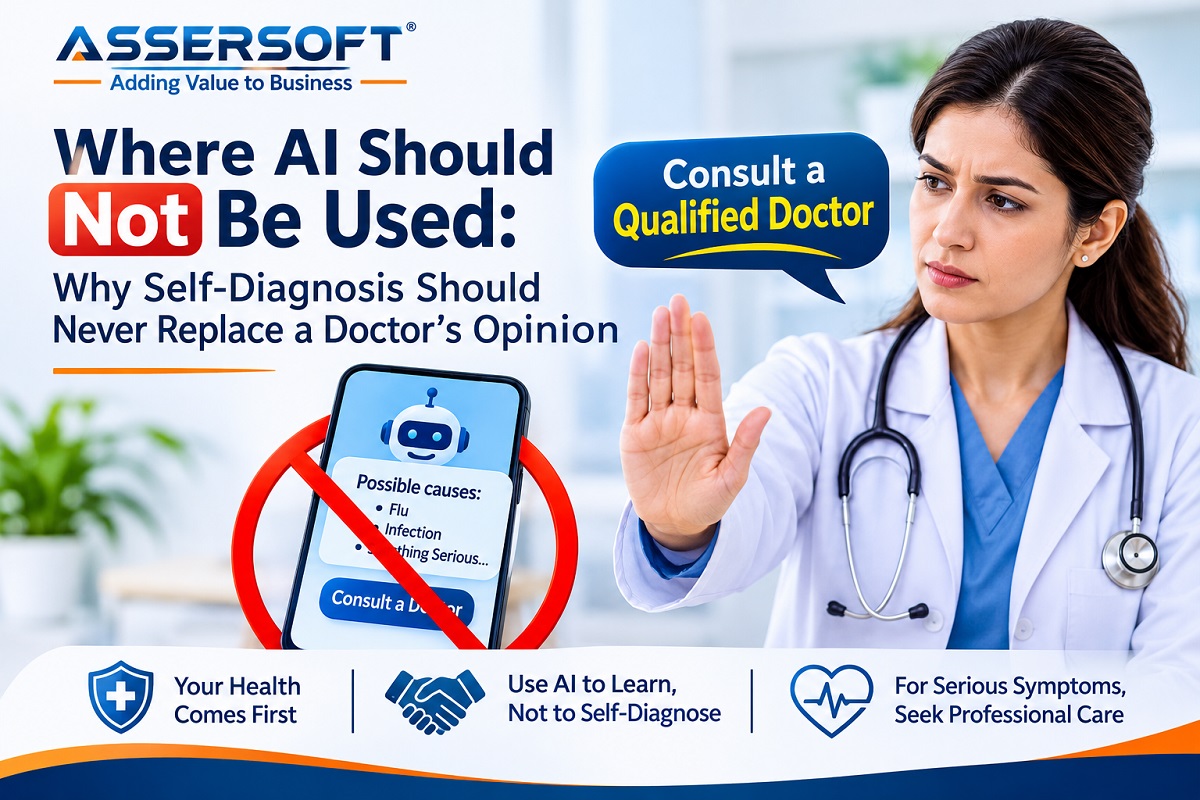
Where AI Should Not Be Used: Why Self-Diagnosis Should Never Replace a Doctor’s Opinion
Artificial Intelligence (AI) is changing the way we live, work, learn, and access information. From business automation to education and healthcare, AI tools are becoming part of our everyday lives.
AI can provide quick answers, explain complex information, and help people make better decisions. However, there are certain areas where depending too much on AI can be risky. Healthcare is one of them.
AI Is Helpful, But It Is Not a Doctor
Today, many people use AI tools like ChatGPT to understand their symptoms, check possible illnesses, or get suggestions about medicines and treatments.
While AI can provide general health information, it cannot replace a qualified doctor.
A physician does more than identify symptoms. A doctor considers a patient’s medical history, physical condition, lifestyle, test results, and other important factors before making a diagnosis.
AI may provide information based on the symptoms you enter, but it cannot always understand the complete medical situation.
Why AI Self-Diagnosis Can Be Risky
There are several reasons why people should not depend entirely on AI for medical diagnosis.
1. AI May Give Incorrect Information
AI systems can sometimes provide inaccurate or incomplete answers. Depending on such information without medical advice can lead to wrong decisions.
2. Symptoms Can Have Different Causes
A headache, fever, stomach pain, or chest discomfort may have several possible causes. AI may suggest possibilities, but only a qualified healthcare professional can properly evaluate the situation.
3. AI Cannot Perform Physical Examinations
Doctors can examine patients, check vital signs, and recommend medical tests. AI cannot independently perform these examinations.
4. Delaying Medical Treatment Can Be Dangerous
If someone trusts an AI response instead of consulting a doctor, they may delay necessary treatment. In serious medical situations, this delay can be harmful.
5. Personal Medical History Matters
Every patient is different. Age, existing medical conditions, allergies, medications, and family history can influence a diagnosis and treatment plan.
Where AI Can Be Helpful in Healthcare
Although AI should not replace doctors, it can be a useful supporting tool.
AI can help people:
- Understand general medical information.
- Learn about common health conditions.
- Prepare questions before visiting a doctor.
- Understand medical terms and laboratory reports.
- Organize health information.
- Get reminders for appointments and medications.
- Support doctors with medical data analysis and administrative tasks.
The best approach is to use AI as an information and assistance tool, not as a replacement for professional medical judgment.
AI and Human Expertise Must Work Together
The future of healthcare is not about choosing between AI and doctors. It is about combining technology with human knowledge and experience.
AI can help healthcare professionals save time, analyze information, and improve efficiency. However, medical decisions should involve qualified healthcare professionals who understand the patient’s complete condition.
For patients, the message is simple:
Use AI to learn, but consult a doctor to diagnose and treat.
If you experience serious or concerning symptoms, seek medical attention rather than relying on an AI response. For emergencies, contact emergency medical services immediately.
Conclusion: Use AI Responsibly
AI is a powerful technology, but it has limitations. Not every question should be answered by AI, and not every decision should be based on its suggestions.
In healthcare, professional medical advice remains essential. AI should support better healthcare, not replace the experience, responsibility, and judgment of qualified physicians.
At Assersoft, we believe technology should add value to people’s lives and businesses. The responsible use of AI means understanding both its capabilities and its limitations.